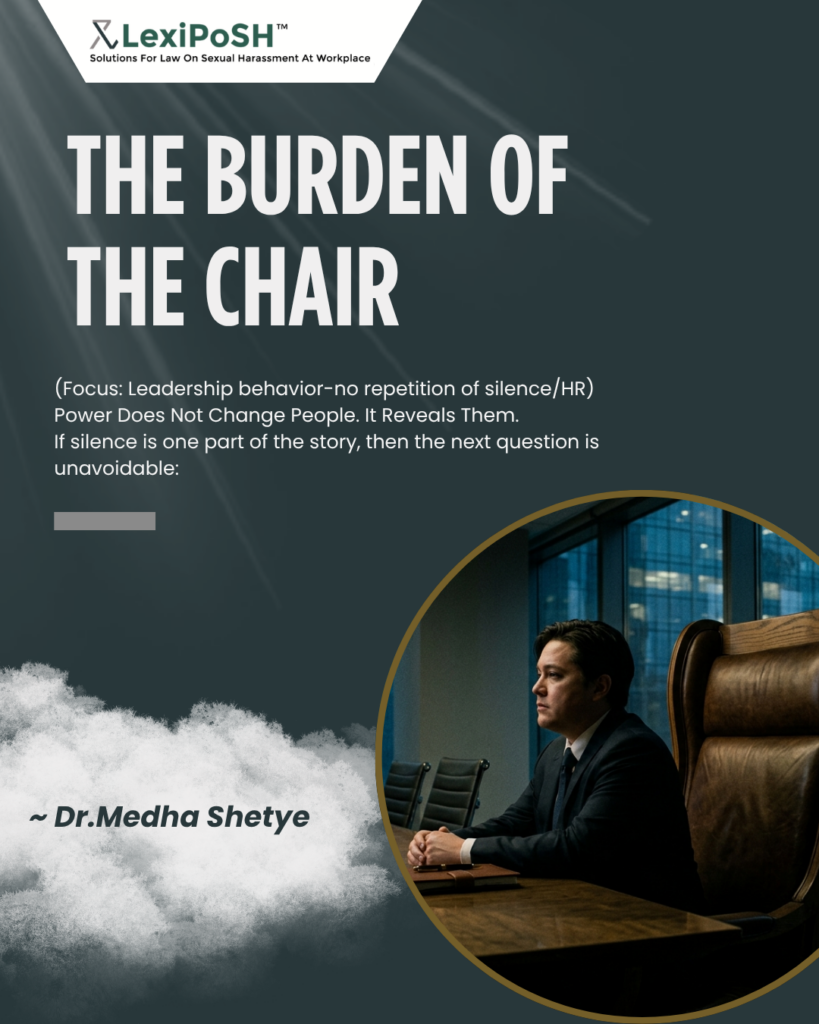
~Dr. Medha Shetye
Who allows that silence to continue?
The Nashik IT case brings attention to something we rarely examine closely, the behavior of individuals once they step into positions of authority.
Because a role does not transform a person.
It amplifies what already exists.
The moment someone becomes a manager, a lead, or part of a decision-making structure, they inherit something far greater than responsibility for tasks.
They inherit influence.
And influence is not neutral.
It shapes:
• What is tolerated
• What is questioned
• What is ignored
This is where leadership quietly defines culture.
Not in strategy meetings.
Not in performance reviews.
But in small, often invisible decisions:
• Whether to take a concern seriously
• Whether to intervene early
• Whether to prioritise people over convenience
The challenge is that these decisions rarely feel dramatic in the moment. They feel manageable. Delayable. Negotiable.
“Let’s wait.”
“Let’s observe.”
“Let’s not escalate yet.”
But leadership is not measured in comfort.
It is measured in moments where action is inconvenient.
Because when you are in the chair, your behavior travels beyond you.
It becomes a signal.
People observe. They interpret. They adjust.
Over time, they don’t respond to policies.
They respond to patterns.
And those patterns are created by leaders.
The real risk is not always active wrongdoing.
It is passive allowance.
A slow normalization of what should have been challenged early.
The Nashik IT case is a reminder that leadership is not about authority.
It is about intervention.
And the real question is not whether systems exist.
It is:
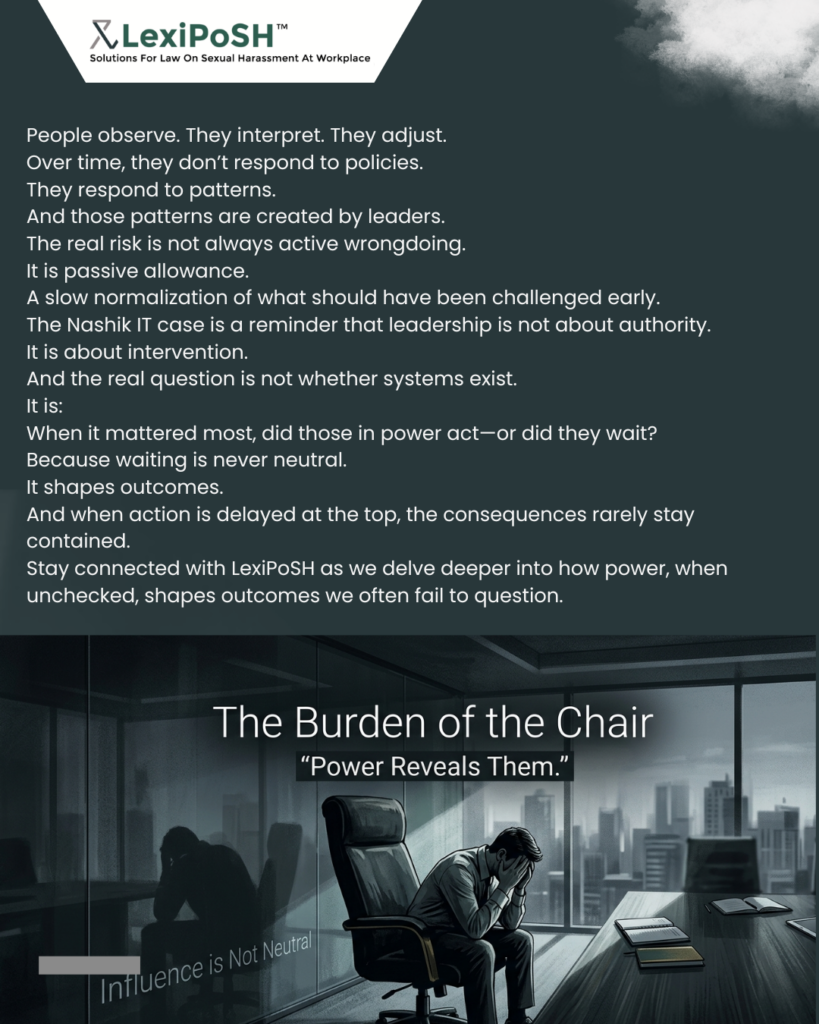
When it mattered most, did those in power act—or did they wait?
Because waiting is never neutral.
It shapes outcomes.
And when action is delayed at the top, the consequences rarely stay contained.
Stay connected with LexiPoSH as we delve deeper into how power, when unchecked, shapes outcomes we often fail to question.