~ Dr. Medha Shetye
The Nashik IT Case Is Not Just About Misconduct. It Is About Silence.
The recent case emerging from Nashik has stirred public emotion, debate, and discomfort. The details are serious, allegations of workplace misconduct, questions of accountability, and concerns about how such situations are allowed to persist.
But beneath everything being discussed, there is a quieter, more unsettling layer.
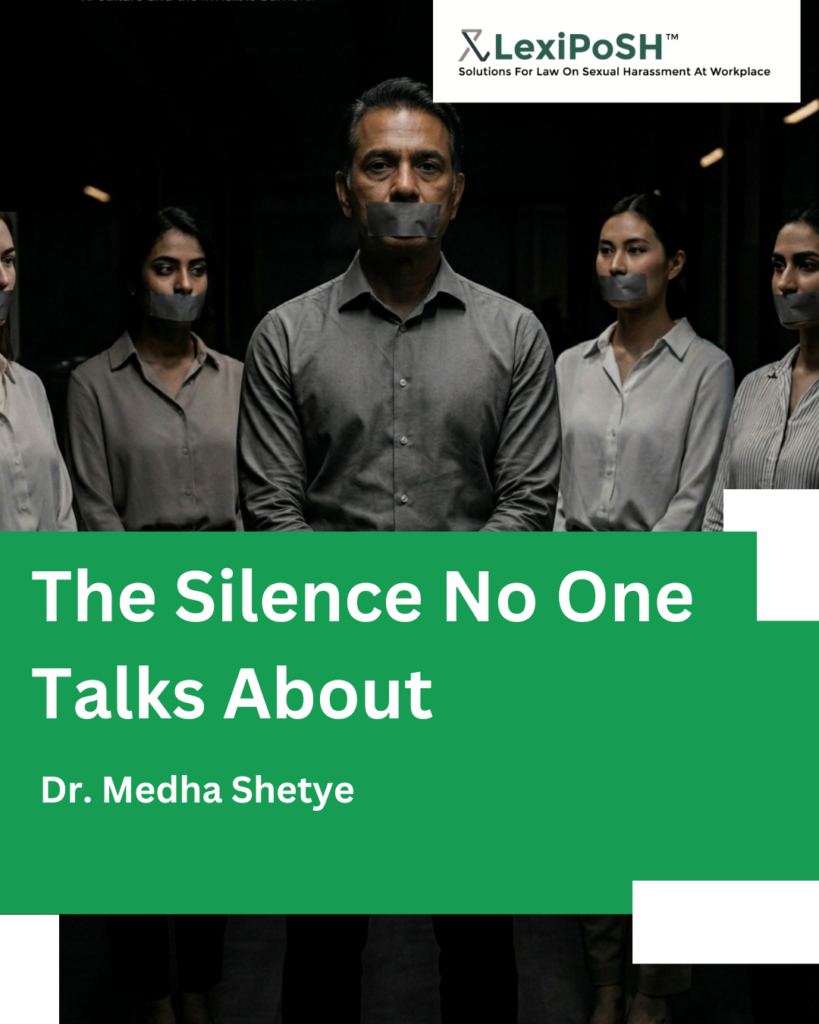
We are talking about what happened. But not enough about what did not happen.Because in every such case, there are always more people present than those directly involved.
There are those who sensed something was off.
Those who heard fragments of truth.
Those who saw behavior that did not sit right.
And somewhere in that chain also sit formal systems, roles designed specifically to respond, to intervene, to protect. Roles entrusted with ensuring that concerns are not just heard, but acted upon. When such mechanisms hesitate, delay, or reduce serious concerns to process, the impact goes far beyond procedure, it shapes belief.
It tells people what is safe.
And more importantly, what is not.
At times, even frameworks meant to safeguard dignity, like the POSH Act, lose their strength not in design, but in execution. When trust in these systems weakens, voices begin to withdraw. And yet, nothing moved, at least not in time.
This is where the real story begins.
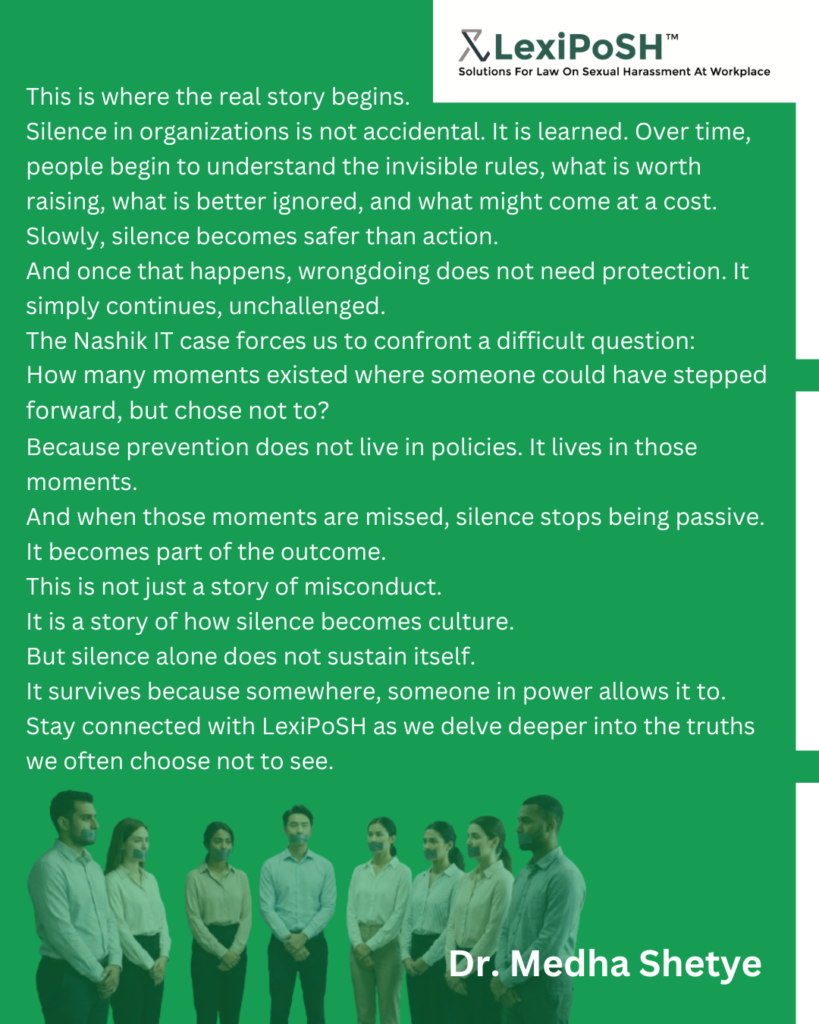
Silence in organizations is not accidental. It is learned. Over time, people begin to understand the invisible rules, what is worth raising, what is better ignored, and what might come at a cost.
Slowly, silence becomes safer than action.
And once that happens, wrongdoing does not need protection. It simply continues, unchallenged.
The Nashik IT case forces us to confront a difficult question:
How many moments existed where someone could have stepped forward, but chose not to?
Because prevention does not live in policies. It lives in those moments.
And when those moments are missed, silence stops being passive.
It becomes part of the outcome.
This is not just a story of misconduct.
It is a story of how silence becomes culture.
But silence alone does not sustain itself.
It survives because somewhere, someone in power allows it to.
Stay connected with LexiPoSH as we delve deeper into the truths we often choose not to see.
Silence is rarely empty. It is often a decision.
In your experience:
Have you ever noticed something at work that didn’t feel right, but chose not to speak up?
No judgment. Just reflection.
What held you back?